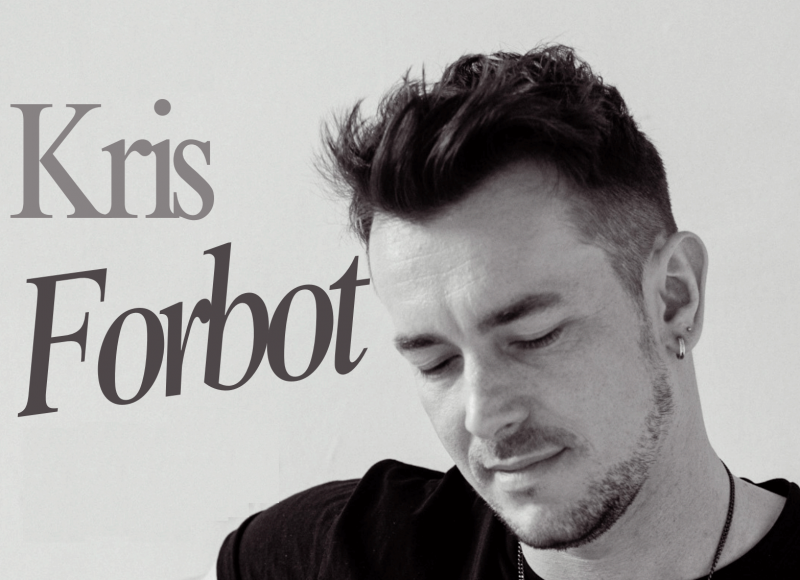
How did your musical journey begin?
It all started with the guitar quite a long time ago, when I was 13 years old. I hadn’t played any instrument before, but the guitar had fascinated me since childhood. It didn’t come from the media, but from personal experiences. I remember going to Mass and sometimes someone would play the guitar—it felt almost like a mystical experience to me. Nothing else moved me in the same way. At home, I was also exposed to live music, as both my mom and dad often played the accordion for family.
At first, you didn’t think about playing professionally.
That’s right. The first few years were mainly about passion and adventure. It began with the Oasis movement and pilgrimages to Częstochowa, during which I developed my guitar skills and listened more experienced musicians. It took a time before I truly felt confident playing the instrument. I was also fortunate to meet Partyzant early in my musical path—widely known as an additional member of the band Dżem, with whom he once performed as a guest. I owe him a great deal in terms of my musical development.
So you’re a self-taught musician, but you also have formal musical education.
During one of the last pilgrimages I took part in, a friend suggested I attend the private Yamaha music school, where Partyzant was teaching. At that time in my life, I was listening almost exclusively to Dżem and knew exactly who he was. Ultimately, I didn’t attend the school because after a few meetings Partyzant invited me to private guitar and music theory lessons. Over time, our student–teacher relationship turned into a friendship. He also prepared me for the entrance exams to the Faculty of Music Education at Kazimierz Wielki University in Bydgoszcz, where I earned a Master of Arts degree and became a qualified music educator. I can teach music, for example, in elementary school.
But you didn’t end up teaching in elementary school?
I did, but many years later. The mentioned Partyzant helped me get a job as a technician for the well-known band Zdrowa Woda, where he was playing at the time. I also worked as their driver, touring all over Poland. That’s when I truly experienced what life on the road was like. Everything came to a change on April 10, 2010. As we all know, the Smolensk air disaster occurred that day, and all music events were canceled. The band stopped performing, and I went on my own musical way. Years later, I was offered the chance to join Zdrowa Woda permanently as a guitarist after Partyzant left the band. I decided not to accept the offer, as I was already involved in other projects. As you can see I might not be in the United States right now—and we probably wouldn’t be having this conversation.
During your career, you’ve collaborated with many well-known artists and reached a wider audience. You appeared on programs like Good Mornin TVN and participated in The Voice of Poland.
Although I didn’t manage to turn any chairs on The Voice of Poland, just reaching that stage and performing on television was a big success for me—especially since I started learning to sing much later than I began playing guitar. Few people realize how complex and lengthy the process is, and how many castings you have to go through to appear on TV. I’ve appeared on TVN several times, which is certainly an achievement, but I consider my greatest success to be the collaborations with artists I’ve met along my musical path. I’ve performed with Mateusz Ziółko and collaborated with the Polish Film Music Orchestra, which allowed me to accompany such renowned musicians as Paweł Kukiz and Urszula. In Poland, with my band DŻA DŻA BINKS, I performed at Dolina Charlotty before the famous Italian singer Zucchero and Paul Young.
You also use your education to teach music to others.
Yes, that has always been a secure source of income and also brings me satisfaction. I consider my greatest life achievement to make living only on music and don’t have to do anything else to earn a living.
You must have many musical inspirations.
They came in stages. The first wave was everything my parents listened to—there was a lot of it, across many styles. Later, when I started playing, Dżem was most important, especially with Jurek Styczyński on guitar—he remains my favorite Polish guitarist to this day. Then came my fascination with Pearl Jam and Guns N’ Roses. As for Slash, he is probably my greatest guitar inspiration. Both Slash and Styczyński share a melodic style of playing, which I really love. At one point, I became deeply immersed in the entire grunge and glam rock scenes of the ’90s. Currently, I have a special affection for Coldplay’s music, which is evident at my concerts, as I perform many of their covers.
How did you end up in the United States?
It wasn’t accidental—I don’t believe in coincidences at all. After one of my performances in Poland, I met Łukasz Zaborowski, who invited me to the U.S. to perform at a Polish community event. New York made a huge impression on me, and since then I’ve been visiting here regularly. I also came to support Misiek Koterski and his show The Strings. I explore, compose, and whenever I can, I perform to stay in shape. I’m also searching for musical inspiration, and this city provides it constantly. I would definitely like to continue developing musically in the U.S. and use my experiences to create new music.
You’ve become known to the Polish community through numerous live performances, but your work can also be found online.
That’s right. I haven’t recorded a full-length solo album yet, but I have released an EP. On YouTube, you can currently find five of my original songs, each with a music video. To find me, simply type “Kris Forbot” into the search section. They are more pop-oriented tracks, and they have already been played on radio stations in Poland.
What can attendees of PrzedMajówka expect from your performance?
What they can always expect at my shows—definitely a great time. There will be well-known Polish rock hits in my arrangements, and I’ll probably present a few original songs as well. It’s worth appreciating that the Polish and Slavic Center creates space for artists and organizes so many events for the Polish community, which truly needs such initiatives. And I can’t wait for PrzedMajówka.