 Interview by Marcin Żurawicz
The past year has been a very intense time in your life.
That’s true. On April 4, 2025, my debut album Ashes And Diamonds was released, and that is always an important moment for any artist. It is a kind of summary of my work so far, and I feel great satisfaction because of it. After many years of work and effort, thanks to the support of many wonderful musicians and artists, as well as the guidance of my manager Anna Maleady and the label Truth Revolution Records, we managed to release this album.
The album has received a very positive reception.
Yes. I’m very happy that the album, which I recorded at The Bunker Studio in Brooklyn, New York, received very good reviews both from listeners and people in the music industry, especially in the jazz world. I won’t hide the fact that recording it required a lot of effort and sacrifice from me, but the satisfaction is enormous. In Poland, reviews appeared for example in the March issue of Jazz Forum magazine, and in the United States in Jazz Weekly Magazine. The album is available on many streaming platforms and online around the world. In this way it can be purchased in England, Belgium, Turkey, Italy, and Japan. I also received information that the label Truth Revolution Records is pleased and that the album is selling well. Songs from Ashes and Diamonds have also been played on many Polish radio stations, including Polish Radio Program 2, Radio Rzeszów, and RMF FM.
What songs are included on the album?
The album contains nine original songs with my music and lyrics. In addition, there are two jazz standards, “Don’t Explain” and “Stormy Weather,” as well as a song by Stan Borys to the words of the poet Cyprian Kamil Norwid titled “Coraz to z ciebie jako z drzazgi smolnej,” which I arranged in a jazz style. It is the only song on the album with Polish lyrics. I also sang the same piece in English on the album under the title “Ashes and Diamonds,” which is also the title of the entire album.
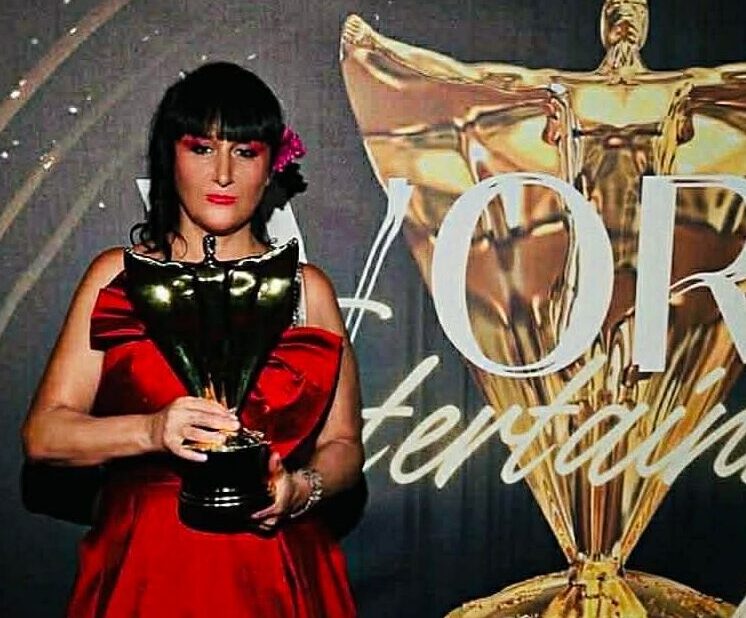
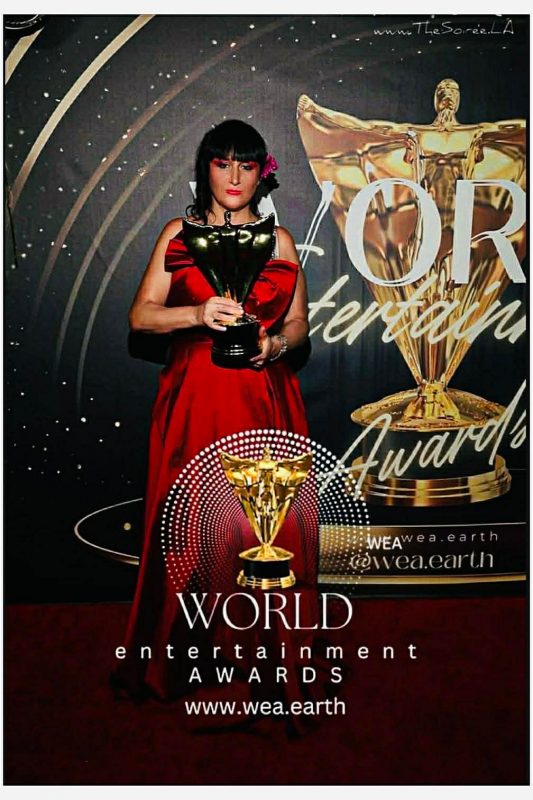
The biggest success related to the album Ashes And Diamonds was the nomination and later the victory in the Best Jazz Album category at The World Entertainment Awards in February this year. You personally flew to California to receive this prestigious award.
Yes. The awards ceremony took place on January 31 in Hollywood and I simply had to be there. The ceremony was held at the famous rock club Whisky a Go Go on Sunset Boulevard. The gala was organized just one day before the Grammy Awards ceremony and several hundred people from around the world attended, including many well-known figures from the music industry and artists who were nominated for Grammy Awards this year. Being in that place was the fulfillment of many dreams for me, and this award is a symbol of victory over all the obstacles I have faced so far on my musical journey. This success gave me strength and motivation to continue creating new sounds and jazz compositions. Thanks to this victory, the Polish media also became interested in my album, since the Polish Press Agency reported the news about the award. At the same time, proper recognition was given to the brilliant Stan Borys, whose music and work are outstanding and timeless.
Stan Borys is an important person and artist in your life.
Yes, and I owe him a great deal. The artistic achievements and music of Stan Borys are impressive and inspire me and many others. I met Stan and his partner Anna Maleady several years ago while working on a Christmas concert, a musical project initiated by Adrian Kubicki, the Consul General of the Republic of Poland in New York. Later, together with Anna Maleady, we organized charity concerts for the Polish community with the participation of children and young people. The goal of these concerts was to promote the work of Polish poets and spread knowledge about the artistic achievements of Stan Borys. Anna Maleady is the main initiator of concerts and events featuring this legendary Polish vocalist.
Stan is a wonderful composer and poet with great sensitivity and musical intuition. Because of our collaboration and long-standing friendship, I would like to thank both Stan and Anna for their enormous support and for taking care of the album project. A few years ago, after a performance at the Polish-Slavic Center with the award-winning jazz pianist David Kikoski, I wanted to ask Stan Borys—who was present there—for permission to record his song “Coraz to z ciebie jako z drzazgi smolnej.” It was Anna who suggested that I should record an entire album. Stan not only agreed for his song to appear on the album, but also suggested that the entire album should be titled Ashes and Diamonds. His voice appears on the album in the Polish version of the song, where he recites a fragment of Norwid’s poem. It is a great honor to collaborate with such an outstanding artist, and this album has changed my life.
You invited very well-known musicians to record your album.
Yes. In addition to the brilliant Stan Borys, the recordings feature some of the best musicians on the New York scene, including the excellent jazz pianist David Kikoski, who received a Grammy nomination for the album Birds of a Feather; one of the best young-generation saxophonists, Stacy Dillard; and guitarist Leandro Pellegrino, who received a Grammy for the album Beautiful Life with Dianne Reeves. The lineup also included bassist Ricky Rodriguez, who performs with Lenny White and appears on the program Saturday Night Live, as well as drummer David Hawkins. Another bassist, Stefano Battaglia, also appears on the album. The two jazz standards were recorded with Spike Wilner, an outstanding pianist and the owner of the New York Jazz clubs: Smalls and Mezzrow.
After releasing the album, you also began promoting it in the media and through concerts.
Yes. In recent months I have given many interviews and performed concerts in Poland, Italy, and here in the United States. For example, in June 2025 I had an interview and concert on Bronx Network TV. In terms of performing, nothing has really changed for me. Contact with a live audience has always been the most important thing. Now there are simply more concerts, more people attending them, and my repertoire has become larger. I also feel more confident as a jazz vocalist.
You worked very hard for this. Releasing the album was not your only success last year.
That’s true. Earlier I became a Grammy ’25 laureate for composing and recording backing vocals for the song “Polvora De Ayer” by the well-known rapper Residente, which appeared on the album Las Letras Ya No Importan. The album received a Grammy Award for Best Música Urbana Album.
How did you become interested in music in the first place?
I was so young that I don’t remember it myself. Apparently, when I was just a few months old, I was already singing on the way to daycare—that’s what my mother says. As long as I can remember, I always knew that I wanted to sing. When I got a little older, I insisted that my parents enroll me in a music school, even though they were not very enthusiastic about the idea. There was simply no musical tradition in our family, which probably explains their hesitation.
I completed elementary music school in my hometown of Jarosław and later attended the vocal department of a secondary music school in Rzeszów. Another important stage was my studies in Poznań, where my teacher was the remarkable Professor Jadwiga Gałęska-Tritt. Working with her helped me develop vocally, opened me up, and really prepared me for later stage performances.
Before coming to the United States, your contact with jazz music was occasional.
Yes. In high school and later I focused on classical and operatic music. We had concerts every month. I sang solo and with choirs—for example the Missa pro Pace by Feliks Nowowiejski at the National Philharmonic. I also did many recordings. Among other things, I recorded solo parts for an album with the well-known German soprano Ingrid Kremling, who has performed at the Metropolitan Opera and La Scala. I also performed with the opera chorus in Poznań, and with Mussorgsky’s Boris Godunov we performed, among other places, in Luxembourg.
So my training was classical, but classical music never completely fascinated me. Even my professor called me as “a big-beat girl,” suggesting that I went beyond the usual framework of classical music.
When did you turn toward jazz?
The turning point was the biography of Miles Davis, which I happened to come across by chance. After reading it, it was as if my interest moved to jazz. It influenced my entire life—what I do and where I am today. Quite quickly I decided that I wanted to sing jazz, and to do it in America, where jazz was born.
When I went to the U.S. consulate in Kraków for a visa and the consul asked me why I wanted to travel, I said that I wanted to visit jazz clubs. The consul then asked which jazz saxophonist I knew. I answered John Coltrane, but said that my favorite jazz musician was the creator of cool jazz, Miles Davis. I received the visa immediately, and in April 2002 I arrived in New York.
However, your career in America did not immediately gain momentum.
That’s true. I worked as an organist in several churches, including St. Stanislaus Kostka in Greenpoint, St. Rose of Lima in Brooklyn, and Our Lady of Mount Carmel in Harlem. At the same time I returned to operatic singing and for several years performed with the New York Lyric Opera. Thanks to that I had the opportunity to perform at Carnegie Hall, Lincoln Center, and Symphony Space. I sang in operas such as L’incoronazione di Poppea by Monteverdi, Suor Angelica by Puccini, and Die Walküre by Wagner.
It was a wonderful period in my life, but it still had nothing to do with jazz. And jazz was the reason I came to New York. That was what I carried in my heart.
When did that opportunity finally appear?
It was a process. I constantly visited jazz clubs and met many jazz musicians. One of the most important figures for me became the pianist and composer Dario Boente, a Latin Grammy winner. He began teaching me true jazz playing. I play the piano fluently, so my real adventure with jazz started with learning jazz style on that instrument.
In 2012 I moved into a building in East Harlem where several musicians and painters lived. That also helped a lot. I began taking vocal lessons from the outstanding jazz vocalist Theo Bleckmann, a respected professor at the Manhattan School of Music. Around that time I regularly participated in Jim Caruso’s Cast Party, Mondays Jam Sessions at the legendary Birdland club, where I began performing as a vocalist and became well known there. Eventually opportunities appeared to perform live in clubs and restaurants. That was when I began looking for musicians to collaborate with, and that is how my band Margo’s Ensemble was formed.
In your work you have always boldly focused on your own compositions.
Yes. I think it started very early. When I was not even ten years old, I could reproduce on the piano the music I heard in cartoons purely by ear. Soon I began adding something of my own and composing my own melodies. I often spent four or five hours a day at the piano, mostly playing by ear and composing. The desire for long hours of practice has stayed with me to this day, and jazz requires constant self-improvement. I practice for hours alone and with teachers.
When performing with Margo’s Ensemble we of course play many jazz standards, but we also perform my compositions. As a creator I would feel unfulfilled if I limited myself only to performing and interpreting standards.
When do you plan to release another album?
That is still a matter for the future, but I am already thinking about it. I’m not yet sure what will ultimately be on it, because I currently have two ideas. Either it will be a mass that I once wrote for organ and jazz ensemble, or the album will feature my interpretations of the works of Duke Ellington, whose music and compositions I love.
During the Before-May celebration at the Polish-Slavic Center on Saturday, April 18, you will sing only one piece. However, it will be an exceptional composition, because “imprisoned swallow” from the repertoire of Stan Borys is one of the most demanding songs for a vocalist.
In this way I want to thank Stan Borys for his help and many years of support. It will also be a rare opportunity for listeners to hear this musical masterpiece performed live. I would also like to add that I always love performing at the Polish-Slavic Center. It is a very special place for me and I have many wonderful memories connected with it. We should appreciate the fact that such a place exists and successfully functions on the cultural map of the Polish community.